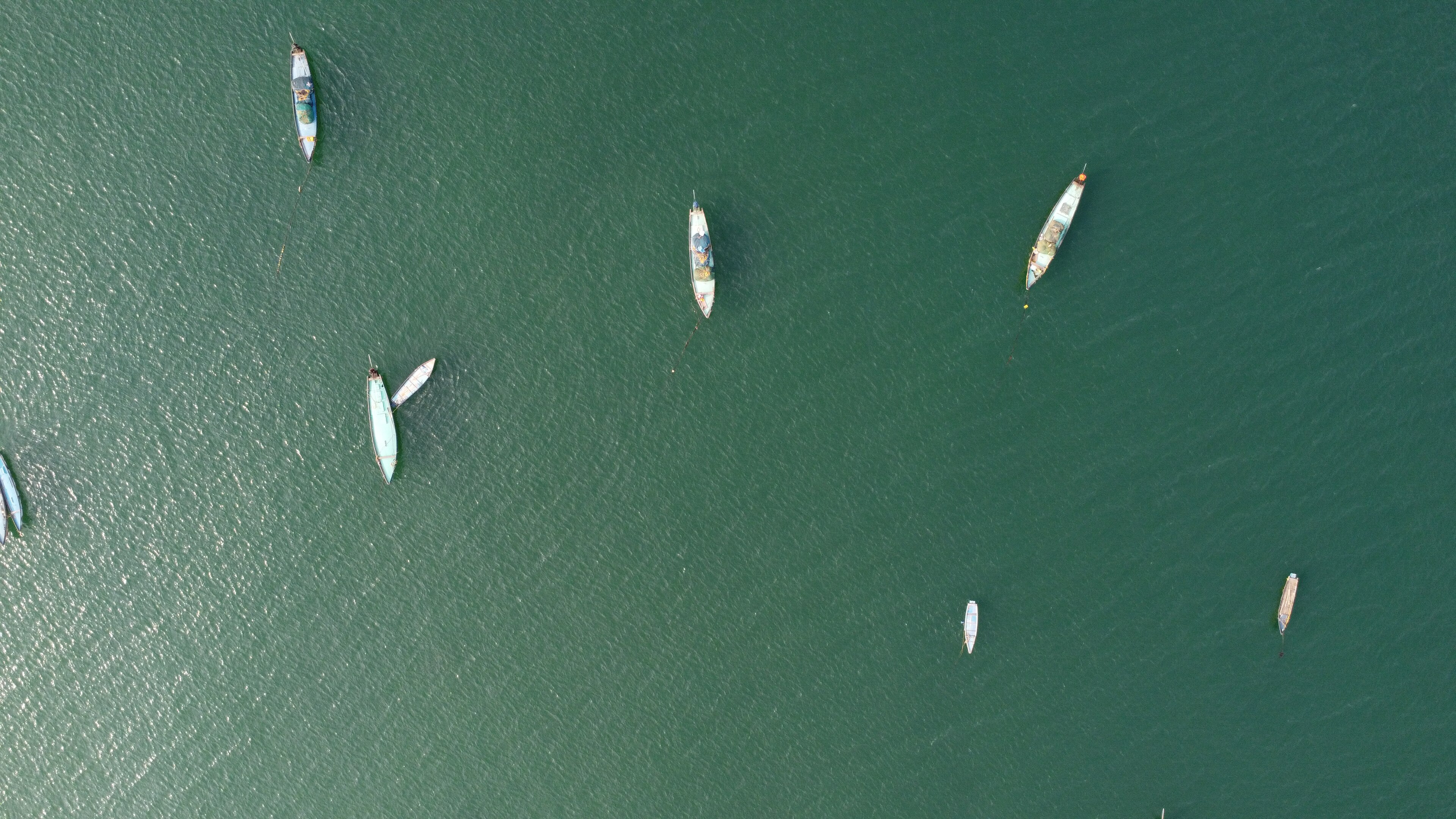
We farm the sea to feed the soil.
Seaweed needs no land, no freshwater, no fertiliser — and it grows a metre a month while drawing carbon out of the air. Samudra grows it with coastal women on the Bay of Bengal, and turns it into the inputs Indian farms, feeds and factories import today.
A crop that grows in the sea — and fixes problems on land.
Seaweed is not a vegetable curiosity. It is one of the fastest-growing organisms on Earth, and when it is processed well it becomes the quiet ingredient inside modern agriculture, aquaculture, food and packaging.
Ropes in the water. Income on the shore.
Here is the whole system: ropes seeded with tropical seaweed are floated in calm near-shore waters. Forty-five days later, each rope has multiplied its weight many times over. No ploughing, no irrigation, no pesticide — the ocean does the work.
The harvest is dried on the beach and sold up the value chain: first as a crop tonic that makes rice and chillies more drought-tolerant, then as a gut-health additive for India’s shrimp farms, and eventually as the gelling agents and compostable films the country currently imports.
India has identified 24,707 hectares of water suitable for this — and cultivates a tiny fraction of it. That gap is Samudra.
The market is forming. The supplier doesn’t exist yet.
Policy, demand and climate money are converging on Indian seaweed — but no branded, quality-consistent, women-powered supplier has claimed the east coast.
The Bay of Bengal is not a backdrop. It’s the business.
From the Gulf of Mannar’s proven seaweed waters to Kakinada’s aquaculture heartland — one coastline carries the whole value chain: growing in the south, processing and selling in the north.
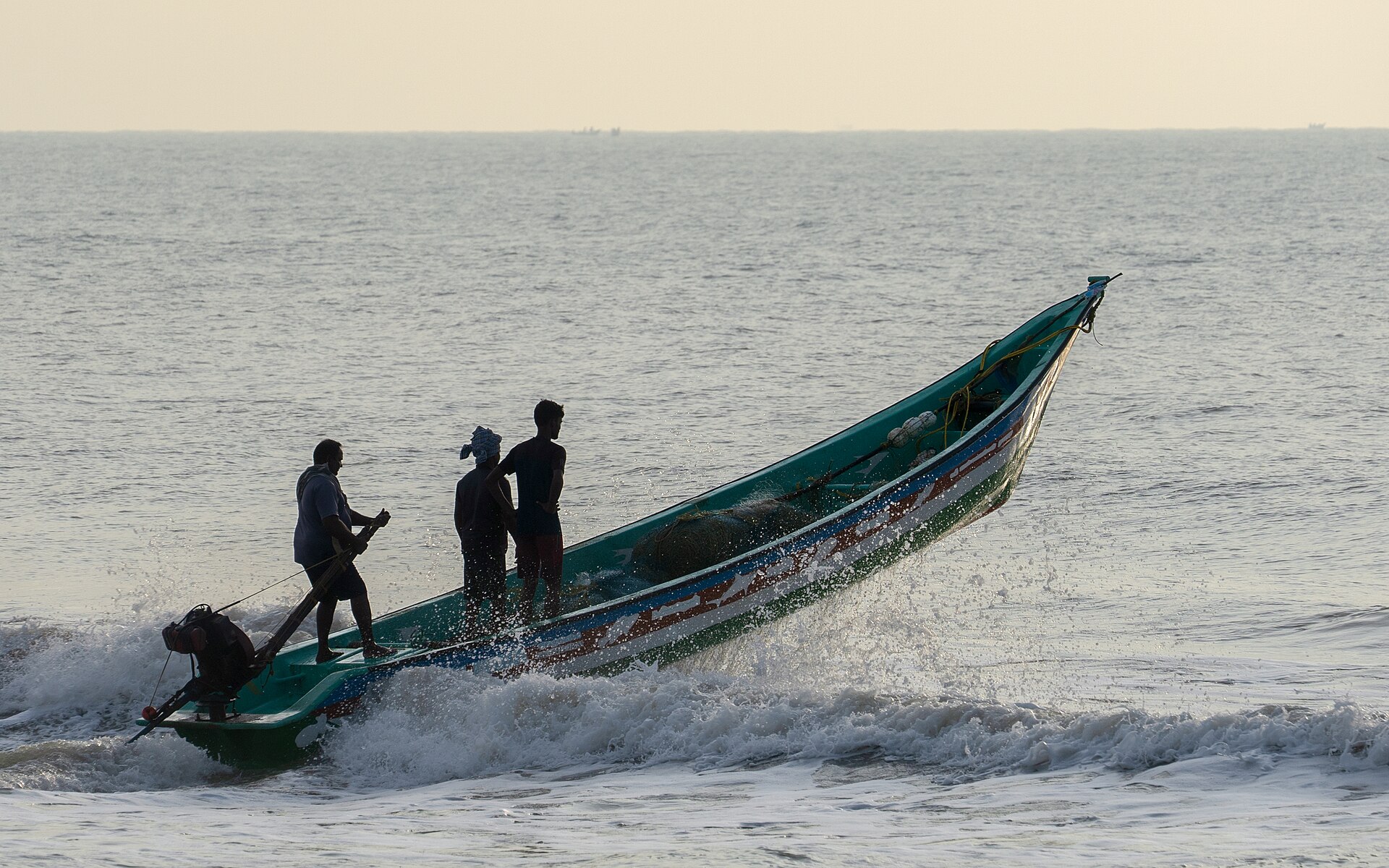
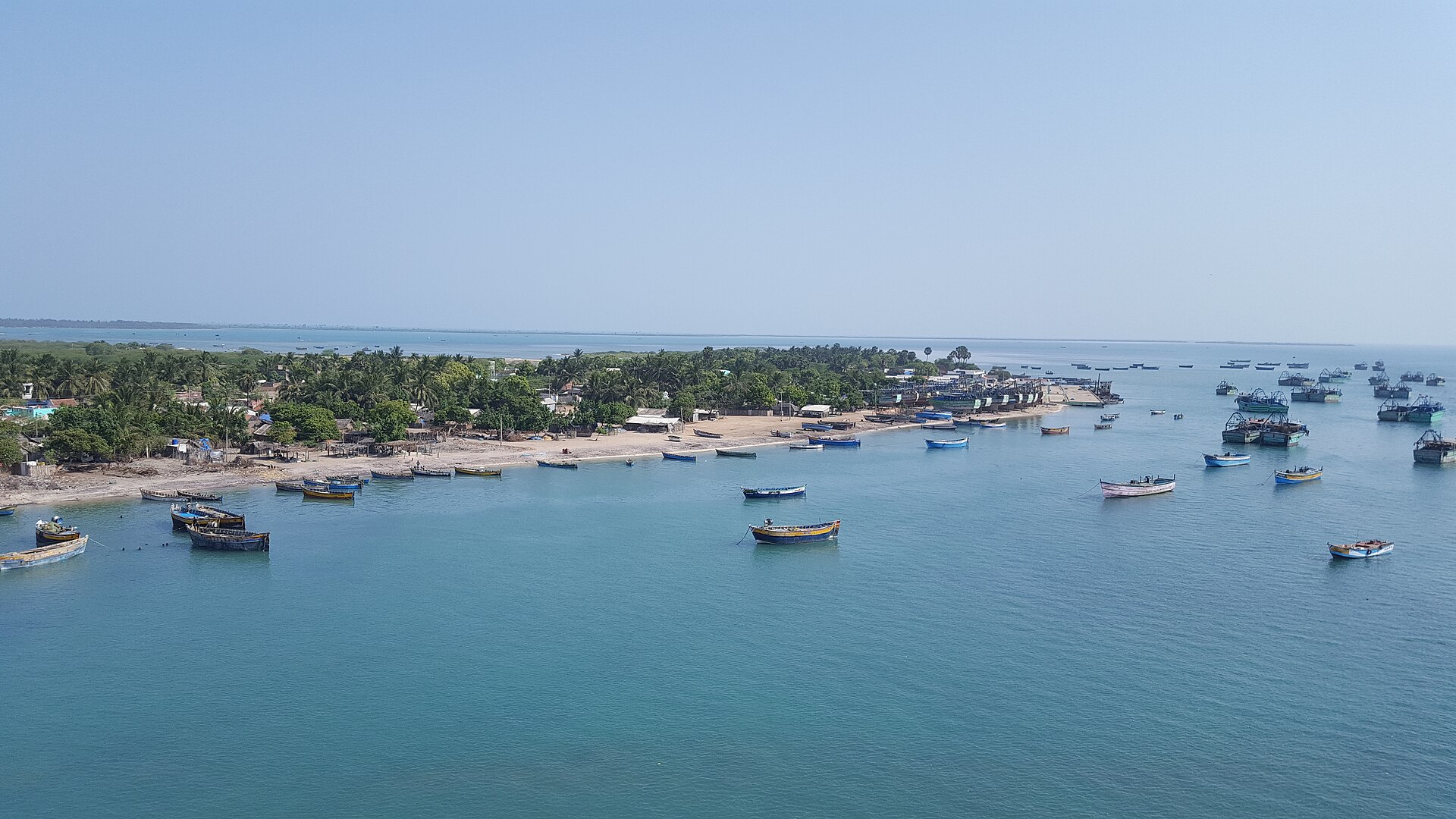
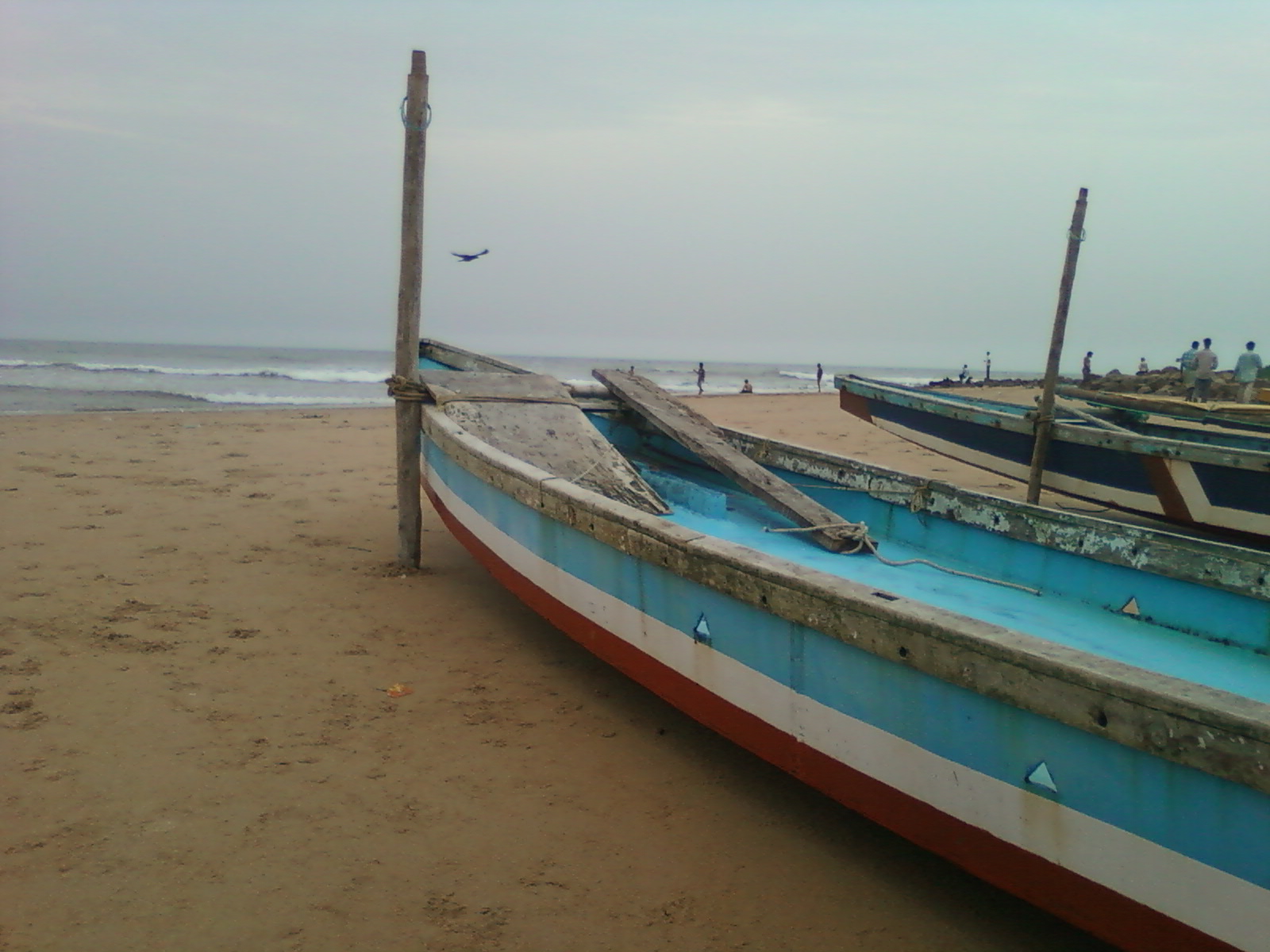
“We hear about the blue economy in conferences. On this coast, it looks like a rope, a raft, a drying net — and a woman who owns all three.”
The Samudra thesisOne crop. A ladder of products — climbed in order.
We start where margins are highest and capital is lowest, and only integrate downstream once volume has earned it. Every product is B2B, spec-driven and repeatable.
AgriTide · biostimulant
Liquid seaweed extract that improves yield and drought-tolerance in field crops — sold to agri-input brands and FPOs, own-brand and private-label.
AquaTide · feed additive
Seaweed meal for shrimp and fish feed. Andhra is India’s shrimp capital — our buyer is thirty kilometres from the drying yard.
Hydrocolloids · carrageenan & agar
The food- and pharma-grade gelling agents India imports today. Higher capex, long contracts, import-substitution pricing power.
Bioplastics & films
Compostable packaging for brands under ESG pressure — R&D-led, premium, and the frontier where the story compounds.
Zero-waste layer
Spent biomass becomes soil conditioner; verified blue-carbon and nutrient credits are pursued as upside — priced as a bonus, never as the plan.
Our factory floor is a village of women who own the water.
Everywhere tropical seaweed farming works — Tamil Nadu, Indonesia, Zanzibar — it works because women’s self-help groups run it. That isn’t CSR garnish. It is the operating system.
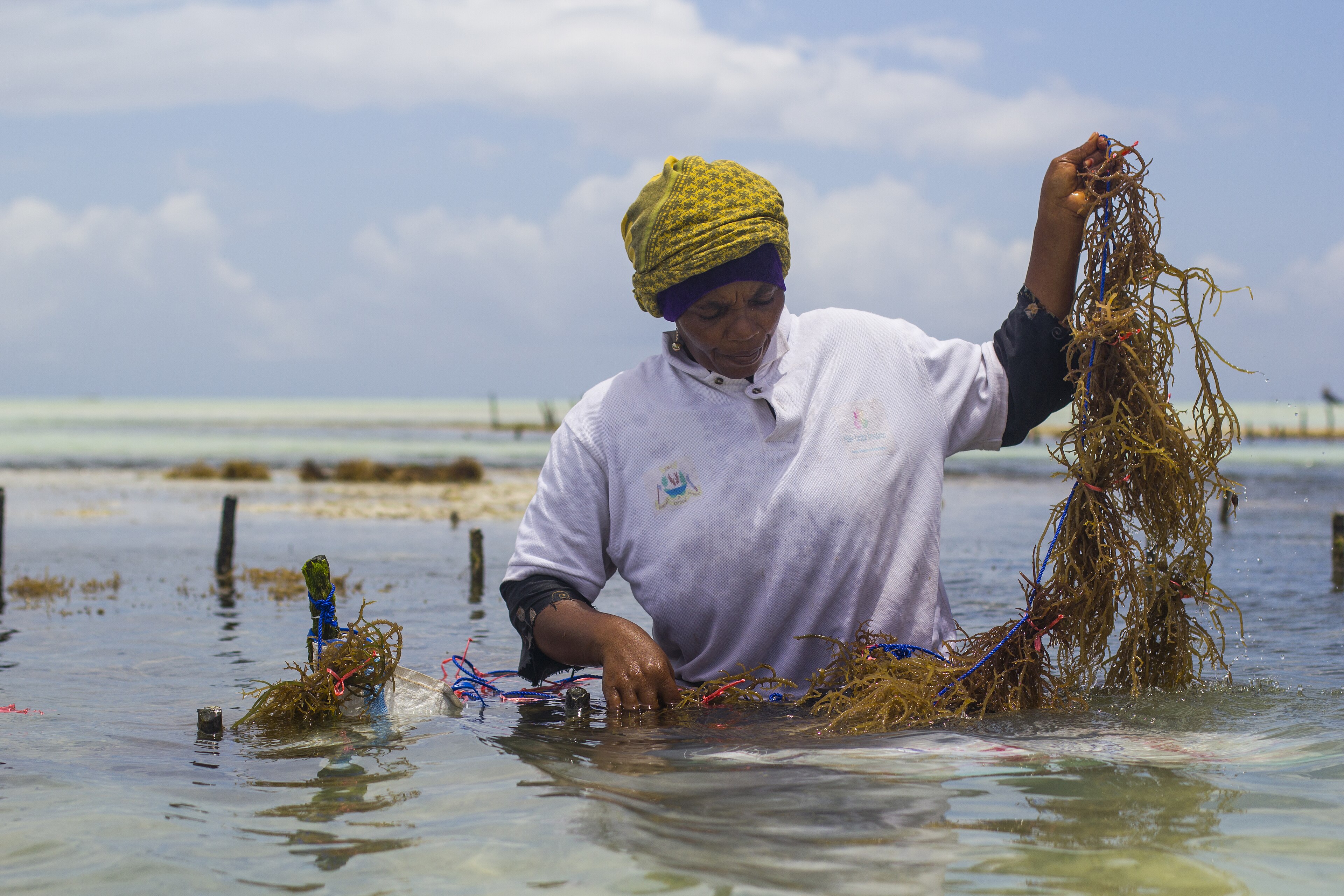
Samudra organises coastal women into producer groups with a contract that removes every reason to say no: we supply seed, rafts and training; we guarantee a floor price; we pay on the spot, digitally, at the drying yard.
In return we get what no competitor can buy — a trained, organised, loyal supply network on the water, and quality graded at source by the people who grew it.
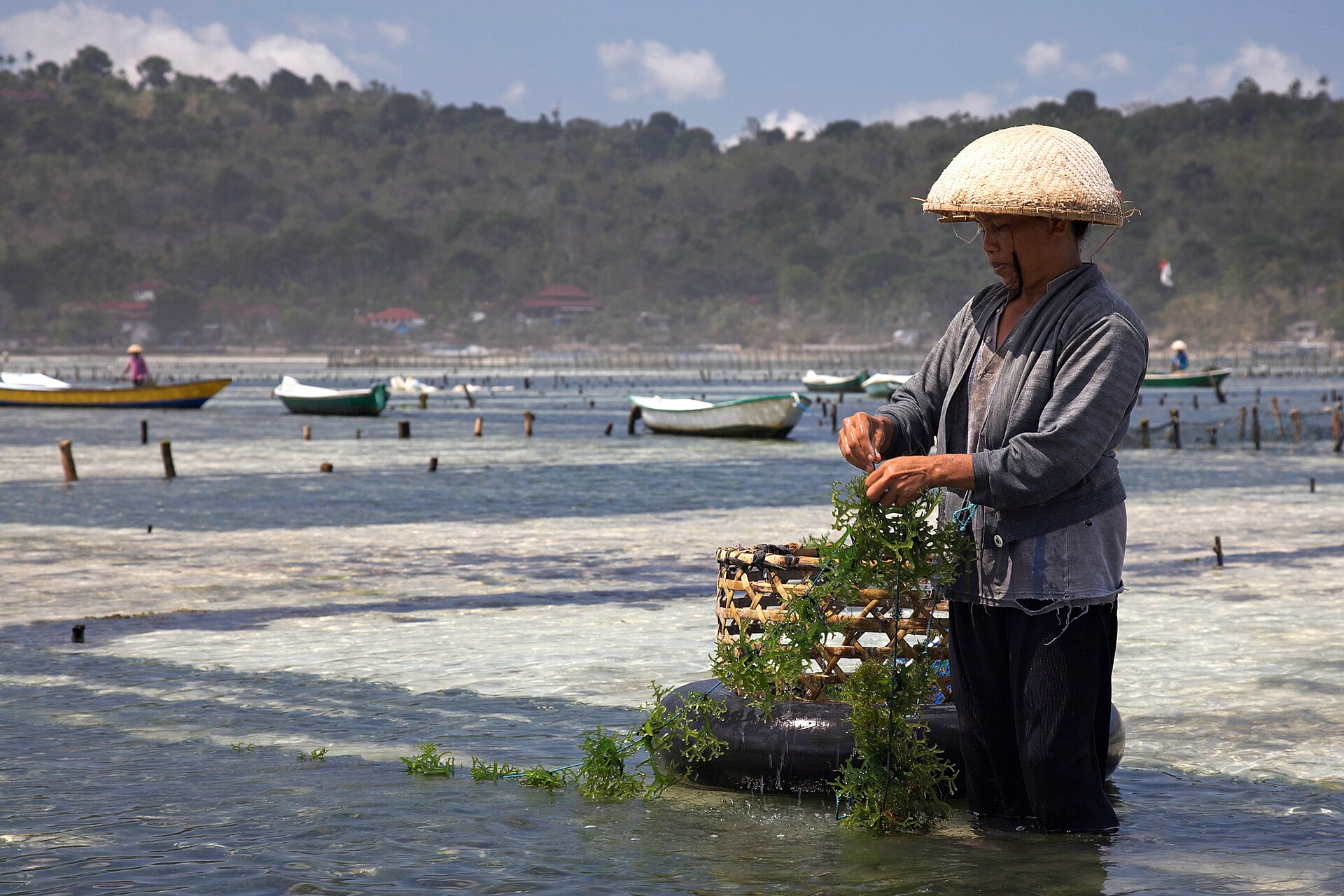
Photographs show working seaweed farms in Indonesia and Zanzibar — the proven model we are bringing home to Indian waters. When our own farmers are in the water, they’ll be on this page.
Asset-light at the water. Asset-smart on land.
We own the brand, the science and the processing. We partner for cultivation. Two coasts, one company: prove the crop where it already grows; process and sell where the buyers already are.
How we make money
- Product sales (~80%) — extract, feed ingredients and hydrocolloids on annual B2B contracts, per tonne and per litre.
- Private-label capacity — established agri-brands want seaweed lines without building coastal supply. We become their factory.
- Traceability premium — batch-level ESG and origin data sold with every contract; it is exactly what enterprise buyers pay extra for.
- Credits as upside — blue-carbon methodologies are young; we register early but never bake credits into unit economics.
Eyes open — the honest risks
- Biology — Kappaphycus suffers disease and summer die-offs; we run multi-species portfolios (Kappaphycus, Gracilaria, Ulva) and tissue-culture seed from CSMCRI lineages.
- Sea state — Andhra’s surf is rougher than Palk Bay’s; cultivation starts in proven southern waters while Kakinada hosts processing and offtake.
- Cyclones — crop cycles are scheduled around the season, assets are insured under PMMSY, and rafts are designed to be sunk and recovered.
- Incumbents — Sea6 Energy and AquAgri validated the science; our differentiation is the organised women-led supply base and east-coast processing nobody else owns.
Prove it. Sell it. Then scale it.
No hydrocolloid plant on day one. One product, one region, one buyer type — then compound.
Prove the crop & extract
Cultivation pilots in the proven Mannar–Palk Bay belt with existing SHG federations; first consistent batches of AgriTide validated with three friendly agri-input buyers. Proof, not profit.
Anchor contracts
Convert pilots into private-label and own-brand supply agreements. First 300 women farmers on contract. Positive unit economics on the extract line.
Go east, go feed
Commission the Kakinada processing line and launch AquaTide into the neighbouring shrimp-feed cluster. Farmer network past 1,000. Multi-species hedging in place.
Integrate & substitute
With volume secured, invest into carrageenan/agar for import substitution and pilot compostable films. Samudra becomes India’s reference seaweed company.
Sourcing seaweed inputs? Let’s build the supply you can’t import.
Agri-input brands, feed mills, food companies, impact investors — come see the water, the lab and the numbers.
hello@shola.life